
Cash vs Bank Transfer: Which Is Safer When Selling Gold?
05 October 2026
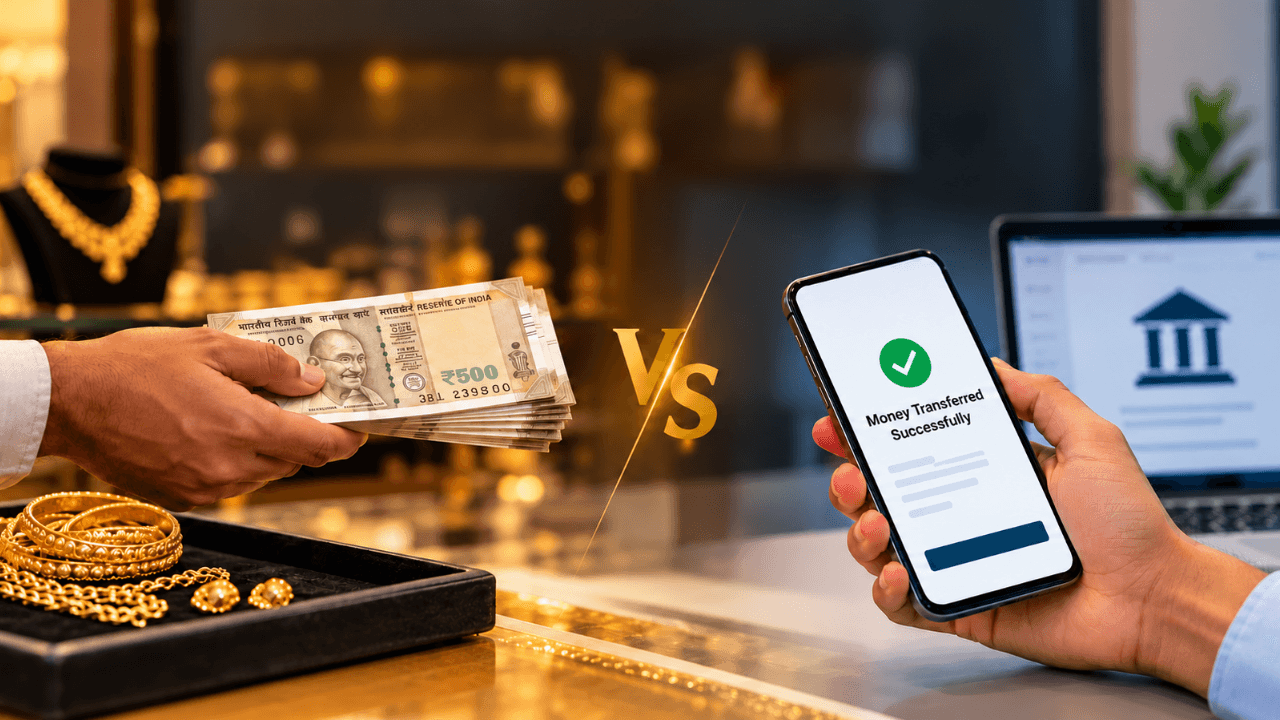
Selling gold usually starts with a simple thought. There are old bangles sitting in a cupboard, a chain that nobody wears anymore, or perhaps a ring that has been kept for years without much reason. At some point, selling it starts to make sense. But when the actual sale happens, there is one thing worth thinking about before walking out of the shop. How should the money be received?
Cash feels simple. The money is handed over, counted, and the deal seems finished. A bank transfer works a little differently, but it has its own advantages. So, when trying to decide how to sell gold for cash, the better option is not always the one that feels easiest at first.
Cash Feels Convenient, But There Is A Catch
Many people still feel comfortable receiving cash. It is familiar, and there is no waiting around to see whether a payment has reached a bank account. Once the money is counted, it feels like the matter is settled.
The trouble starts when the amount is quite large. Carrying several thousand rupees is one thing. Carrying a much bigger amount after selling valuable jewellery is another. There is always the possibility of losing the money or having it stolen on the way home.
There are also legal limits on cash payments in India, particularly for high-value transactions. So, accepting cash is not simply a matter of personal preference. The amount and the applicable rules need to be considered, too.
Why A Bank Transfer Makes More Sense
A bank transfer might not feel as tangible as cash, but it has one useful advantage. There is a record of the transaction. The amount received and the date of payment can usually be checked later through the bank statement.
It also saves the seller from carrying a large sum of money around. That small detail can make the journey home a little less worrying, especially after selling several pieces of gold.
There is just one thing to remember. A payment screenshot does not prove that money has reached the account. It is better to open the banking app or check the account balance before treating the sale as complete.
At SVS Gold, we offer instant digital payments through bank transfer once the customer accepts our valuation. This allows the payment to be checked through the customer's own bank account.
Before The Payment, Look At The Valuation
It is quite easy to get caught up in the payment part of selling gold. After all, that is the moment when the seller finally receives the money. But there is something more important to settle first. Is the amount being offered fair?
Gold value depends on factors such as purity, net gold weight and the prevailing market rate. The weight of the entire piece may not be the same as its net gold weight, particularly when stones or other non-gold components are involved.
Anyone wondering how to sell gold for cash should ask how the final amount was worked out. There is no harm in asking the buyer to explain the calculation. A genuine buyer should be willing to do so without making the customer feel uncomfortable.
At SVS Gold, we believe the customer should understand the evaluation instead of having to accept a figure without an explanation.
Where Should You Sell Gold For Cash?
Finding a buyer is not particularly difficult. Finding one who explains things properly is what deserves a little more attention.
When looking for where to sell gold for cash, check whether the buyer explains the purity test, shows how the valuation is reached and tells you the payment method before the sale. An offer that sounds unusually attractive may not tell the whole story if the actual calculation remains unclear.
For anyone planning to sell gold for cash in Hyderabad, it makes sense to compare a few buyers rather than settle on the first shop visited. Pay attention to how they handle the jewellery, whether they answer questions and whether the final amount is explained clearly.
A little time spent checking these details can make the selling experience feel much less uncertain.
How We At SVS Gold Approach Gold Selling
At SVS Gold, we feel that selling gold should not leave customers guessing about what happened to their jewellery or how its value was decided. People come to us with different reasons for selling. Some have old jewellery they no longer wear, while others may need to put the money towards something more useful. Whatever the reason, they deserve a clear explanation before making a decision.
We use advanced XRF technology to test gold purity without damaging the jewellery. The evaluation takes place in your presence, and we consider purity, net gold weight and live market rates when determining the value. We explain the process so you can understand the offer and decide whether you want to proceed.
Once you accept the valuation, we make the payment through an instant digital bank transfer. This gives you a transaction record and means you do not have to carry a large amount of cash home. We want every customer to feel that the process was fair, straightforward and handled with care.
Final Words
There is no denying that cash feels familiar. Some people simply prefer handling physical money, and that is understandable. But when the amount involved is large, carrying it around can create unnecessary worry.
A bank transfer is generally the more practical choice for a substantial gold sale. It leaves a payment record and allows the money to go directly into your account. Just make sure the payment has actually arrived before leaving.
The other part matters just as much. Know how your gold was valued, check the amount being offered and keep a record of the transaction. Selling jewellery is a financial decision, even when the pieces have been sitting unused for years. It is worth taking a little care with the details.
Frequently Asked Questions
Generally, yes. A bank transfer creates a transaction record and removes the need to carry a large amount of physical money home.