
How Gold Purity Is Tested: XRF Machine vs Acid Test
11 August 2026
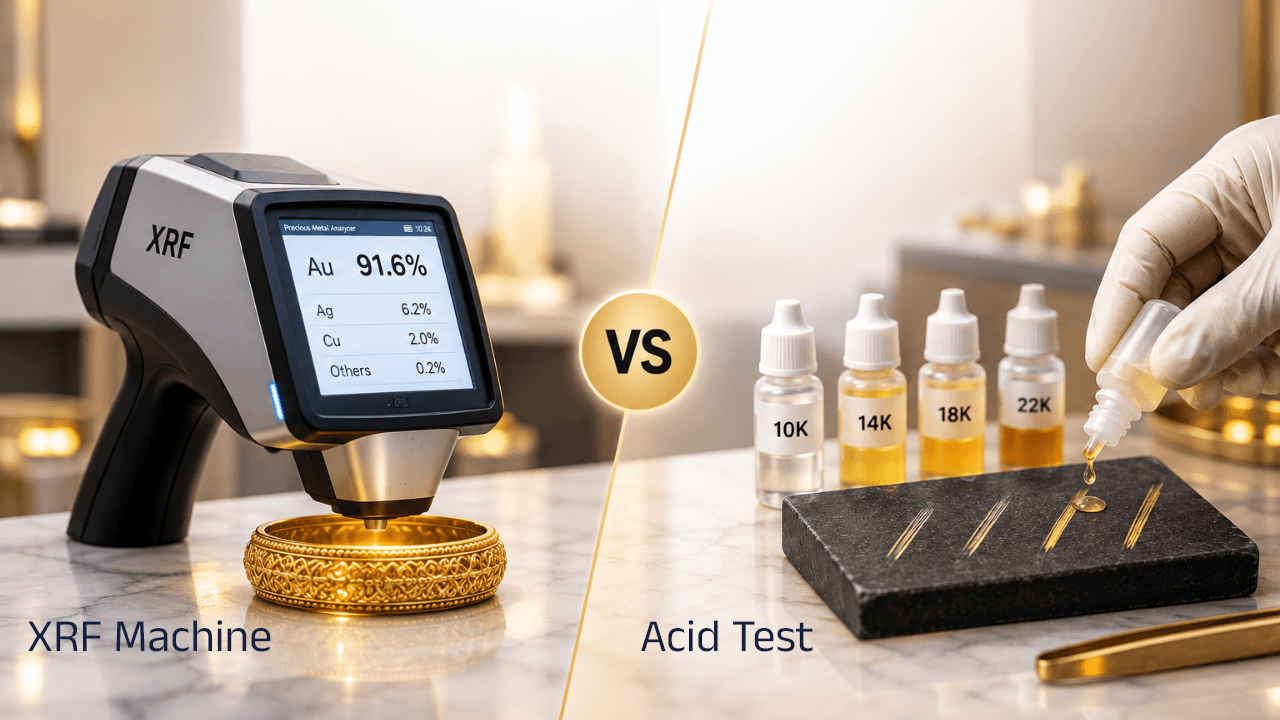
Selling gold can feel like a simple transaction until one question comes up: how is the purity actually decided? A piece may look bright, feel heavy and even carry a hallmark, but none of that alone tells the complete story.
Gold purity testing is really about finding out how much actual gold is present in an item. There are different ways to do it, and two methods people often hear about are the XRF test and the traditional acid test.
Understanding the difference makes the whole process a little easier to follow.
Step 1: Looking At The Gold Before Testing
Before any machine or chemical test is used, the gold is usually examined properly. The type of jewellery, markings, weight, design and visible condition can all give some useful clues.
A 22-karat chain, for example, should have a different gold content from an 18-karat ring. But markings alone should not be treated as final proof. Jewellery can be old, repaired, mixed with other metals or marked differently depending on where it came from.
This is where how gold purity is checked becomes important. The test needs to look beyond appearance. At SVS Gold, we keep this part of the process clear for customers. We believe knowing what is being checked and why makes selling gold much less confusing.
Step 2: Testing With An XRF Machine
The XRF method has become popular because it can check gold without damaging the jewellery. An XRF gold testing machine uses X-rays to examine the metals present in a sample and gives an estimate of its composition.
This is one of the reasons an XRF gold purity testing machine is useful when jewellery needs to be checked quickly while keeping it intact.
The machine can show the presence of gold and other metals such as silver, copper or zinc. It can also give a purity reading that helps determine the approximate karat value.
Still, it is worth remembering that XRF mainly examines the surface of the item. If the surface has been plated, polished or altered, the reading may not always tell the whole story. This is why proper testing and experienced handling matter.
Step 3: Understanding The Acid Test
The traditional acid test for gold works in a different way. A small mark is usually made on a testing stone, and specific acids are applied to compare the reaction with known gold purity levels.
It is an older method, but that does not make it useless. It can still give a practical indication of purity when performed correctly.
The obvious difference is that the process can involve scratching the jewellery or taking a tiny sample. So, unlike XRF testing, it is not completely non-destructive.
Acid testing also depends more on the skill of the person carrying it out. The result can be affected by the testing method, the part of the jewellery tested and the experience of the tester.
Step 4: Comparing XRF And Acid Testing
So, which method is better?
There is no need to make the answer more complicated than it is. XRF is quick, convenient and does not normally damage the jewellery. Acid testing is a traditional method that can be useful for checking purity through a physical comparison.
For many customers, the biggest attraction of XRF is simply the fact that the jewellery can be tested without cutting or scratching it.
The important thing is not just the machine or chemical being used. It is also how the test is performed and how the result is interpreted. That has a direct connection with gold testing machine accuracy, because a machine reading still needs to be taken in the right context.
Step 5: Separating Purity From Gold Wastage
There is another point that often causes confusion during a gold sale: purity and wastage are not the same thing.
Purity tells you how much gold is actually present in the jewellery. Wastage refers to the additional amount a jeweller may account for during making or processing. So, the gold wastage percentage should not be confused with the purity percentage shown during testing.
The wastage percentage for gold can vary depending on the type of jewellery and the terms of the transaction. It is therefore better to ask clearly what is being deducted and why, instead of assuming that every deduction is related to purity.
How We At SVS Gold Keep The Process Clear
We at SVS Gold focus on making the selling process straightforward. We check purity using XRF technology without damaging the gold, and our pricing is based on the real-time market value. There are no hidden charges, and customers can understand what their gold is being valued for.
We also melt gold or silver in front of the customer when required, because transparency matters when something as valuable as jewellery is being sold.
A Simple Gold Selling Process At SVS Gold
At SVS Gold, we start with a branch visit and a quick evaluation. Customers carry their Aadhaar card, and they need to be at least 21 years old. We then check the purity using XRF technology and confirm the value before making the payment.
If pledged gold needs to be released, we can also help clear the loan and interest directly with the bank, NBFC or pawnbroker. Once the gold is released, the remaining amount is paid to the customer instantly.
Final Words
Gold purity testing does not have to be mysterious. XRF testing and acid testing simply use different ways to understand what is inside a piece of jewellery. XRF offers a quick, non-destructive approach, while the acid method relies on a more traditional physical test.
What matters most is that the process is explained clearly and the value is based on the actual purity and current gold rate. At SVS Gold, we aim to keep that process transparent, from the first purity check to the final payment.
Frequently Asked Questions
At SVS Gold, gold purity is tested using XRF technology to analyse the composition of the jewellery without normally causing damage. The purity reading, along with the gold's verified weight and applicable market rate, is used to determine its value. The testing process is explained clearly to customers before the transaction is completed.