
Gold Wastage And Making Charges: What You Lose When Selling Jewellery, And Why
12 October 2026
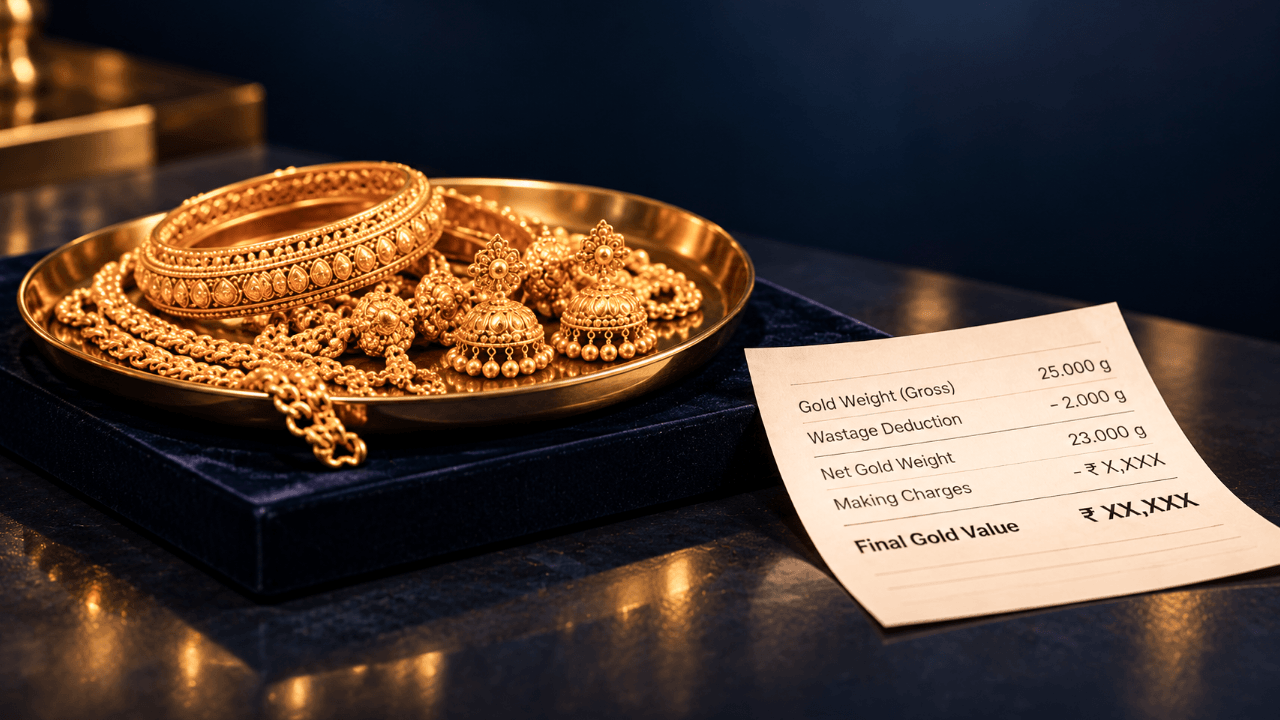
Buying gold jewellery can feel quite simple. The price is paid, the jewellery comes home, and over time it starts to feel like an asset. Selling it, though, can make the calculation look very different.
The part that often surprises people is that the amount paid while buying jewellery is not the same as the amount received while selling it. Making charges, wastage, purity, weight and the current gold rate all have a role. Understanding these small details can make the final offer much easier to judge.
What Is Wastage In Gold?
What is wastage in gold? The word sounds like some gold has simply disappeared, but that is not really the whole story.
Wastage usually refers to the amount of gold that may be considered lost during the process of making a piece of jewellery. Cutting, shaping, joining and finishing can involve some material loss. Different designs may therefore have different wastage calculations.
When jewellery is sold, however, the original wastage amount does not usually come back as money. This is one reason the selling value can feel lower than expected.
Where Do Making Charges Go?
Making charges in gold are basically the cost of turning gold into jewellery. They cover the work involved in designing, crafting and finishing the piece.
The important thing to remember is that making charges are generally a buying-side cost. Paying ₹5,000 or ₹10,000 for craftsmanship does not mean that the same amount becomes part of the gold's resale value.
This is why a jewellery bill can look much higher than the eventual value offered when the piece is sold.
Understanding how gold making charges are structured can help buyers set realistic expectations for future resale value.
How Gold Wastage And Making Charges Are Calculated
There is no single calculation that applies to every piece of jewellery. Purity, net gold weight, design and the jeweller's pricing method can all affect the original bill.
If wondering how to calculate gold making charges, the first thing is to look at the original invoice and see whether the charges were listed as a percentage or a fixed amount. Wastage may also have been shown separately.
At the time of selling, the focus is more likely to be on the actual gold content and current market rate, rather than what was originally spent on making the jewellery.
Why The Selling Amount Feels Lower
This is where many sellers feel disappointed. A necklace might have cost ₹80,000, but that does not mean it contains ₹80,000 worth of gold.
Part of the original price may have gone towards making charges, wastage and, depending on the jewellery, stones or other components. These costs can make the purchase price quite different from the recoverable gold value.
The gold wastage percentage also matters when understanding the original price, but it should not be treated as money that can simply be recovered during resale.
At SVS Gold, we believe customers should be able to understand how their gold is being valued rather than simply being handed a final figure without an explanation.
What Should Be Checked Before Selling?
The current gold rate is only one part of the picture. Purity and net gold weight matter just as much, especially when jewellery includes stones, beads or other materials.
It is also worth asking how the jewellery is being tested and how the final offer has been calculated. A clear explanation can make it much easier to compare offers without getting distracted by a headline gold rate.
We at SVS Gold use professional evaluation and XRF technology to check purity without damaging the jewellery, while keeping the valuation process transparent.
How SVS Gold Approaches Gold Valuation
At SVS Gold, we started with a simple idea: selling gold should not feel confusing. We assist clients in comprehending how their jewellery is evaluated through modern assessment technology, professional skills and effective communication. The purity of gold, net weight of gold and the current market rate are considered prior to giving an estimate. We do not intend to merely provide a value, but we also wish to provide its basis.
We carry out the evaluation transparently, so customers can see what is happening. Once the valuation is accepted, we provide secure digital payment through bank transfer. For us, fair dealing is about more than completing a transaction. It is about making sure customers leave knowing exactly what happened to their gold and why it was valued that way.
Final Words
Selling jewellery is not the same as reversing the original purchase. The craftsmanship and other costs that made the jewellery expensive to buy may not carry the same value when it is sold.
So, rather than focusing only on the original bill, look at purity, net weight, the current gold rate and the way the buyer has calculated the offer. That makes the final number easier to understand, and probably a little less surprising.
Frequently Asked Questions
Bank transfer is generally safer because it creates a clear payment record and reduces the risks associated with carrying large amounts of cash.